

Underslung Crane: Efficient Material Handling for Compact Industrial Workspaces
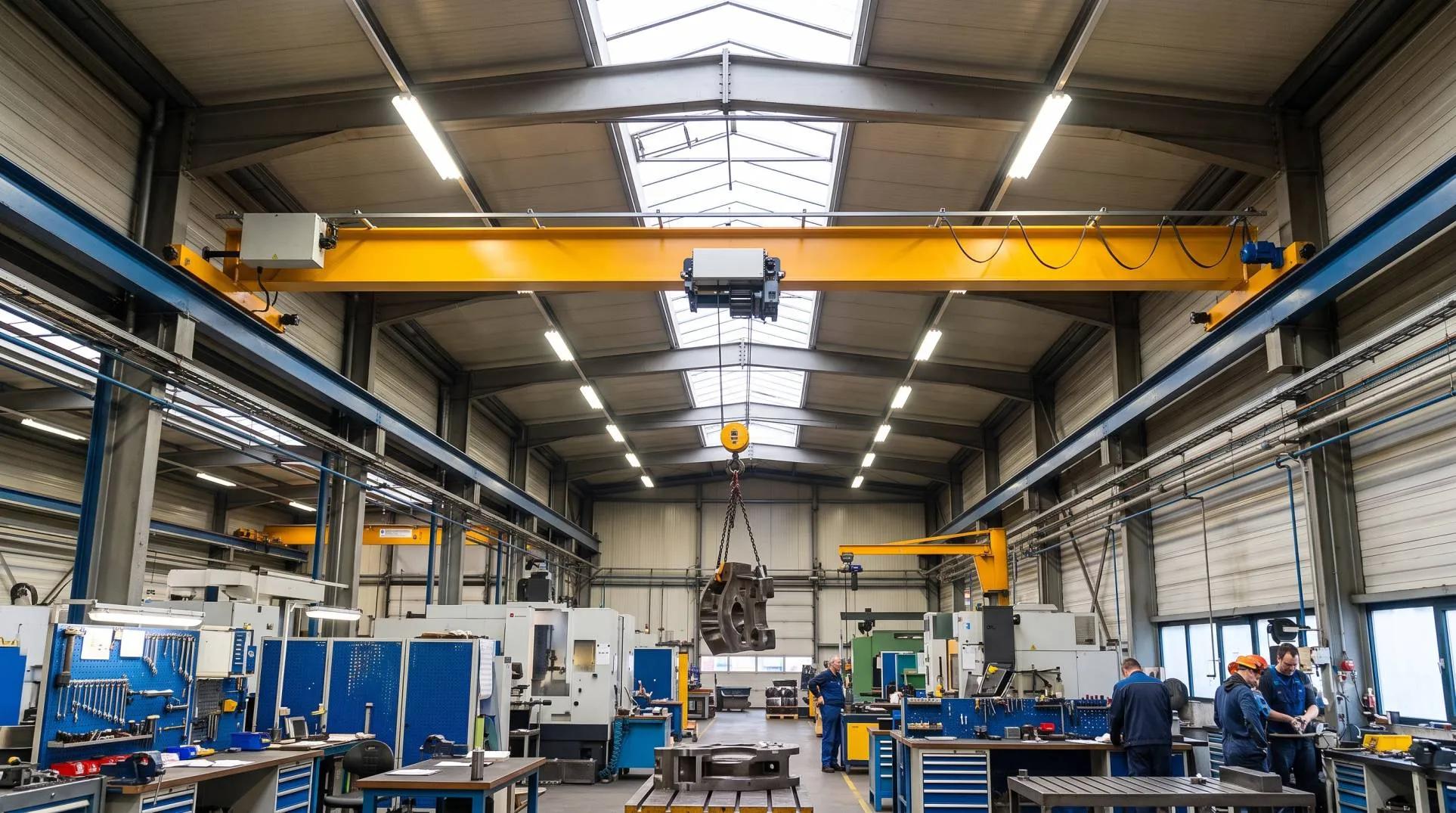
Modern industries need material handling systems that improve productivity without demanding excessive floor space or complicated structural arrangements. An underslung crane is designed to address these requirements by operating from the underside of supporting runway structures, making it a practical choice for facilities where available headroom and floor area are limited. It can support smooth movement of materials across production areas, workshops, assembly lines, warehouses, and other industrial environments.
Dhiraj Crane has been associated with industrial lifting solutions for more than 50 years. Established in 1974, the company has built its reputation through engineering expertise, dependable manufacturing, customization, timely delivery, and after-sales service. Its website highlights its experience in customized lifting systems, complete crane solutions, installation, maintenance, retrofitting, and industrial applications.
What Is an Underslung Crane?
An underslung crane is a type of overhead lifting system in which the crane travels along the lower flange of runway beams or supporting structures. Unlike conventional top-running cranes that generally operate on top of runway rails, this arrangement allows the lifting equipment to use the underside of the supporting structure.
This configuration can be especially useful in buildings with restricted headroom or where existing structural conditions make a traditional overhead crane arrangement less practical. The crane can move horizontally along its runway while the hoisting mechanism raises and lowers loads as required.
The design of an underslung crane can be adapted according to the building dimensions, load requirements, lifting height, travel distance, duty cycle, and operational environment. This makes it suitable for industries seeking a flexible material handling solution rather than a standard, one-size-fits-all system.
How Does an Underslung Crane Improve Industrial Operations?
Material handling directly influences production speed, workplace organization, equipment utilization, and employee safety. Manual transportation of heavy components can consume significant time and may increase the possibility of handling-related incidents. A properly designed lifting system can reduce unnecessary manual movement and create a more organized workflow.
An underslung crane allows loads to be transported horizontally between designated workstations. Components can be moved from storage to production, from production to inspection, or between assembly areas without requiring separate floor-mounted handling equipment for every movement.
Its ability to work within the available overhead structure can also help industries make better use of existing building space. This is particularly valuable for facilities where floor space is occupied by machinery, storage racks, production equipment, or vehicles.
Key Applications of Underslung Crane Systems
The versatility of this crane arrangement allows it to serve a broad range of industrial activities. Depending on the design and capacity, applications may include:
Manufacturing and fabrication workshops where components need to be moved between production stations.
Assembly areas where controlled lifting and positioning are required during manufacturing.
Warehouses where materials must be transferred efficiently without occupying valuable floor space.
Maintenance facilities where machinery parts and equipment require regular lifting.
Automotive and engineering units where repetitive movement of components forms part of daily operations.
Industrial plants with low headroom or structural limitations that make conventional crane arrangements difficult.
The correct application depends on factors such as load weight, frequency of lifting, available headroom, building structure, travel requirements, and the desired lifting height. Professional engineering assessment is therefore important before selecting the equipment.
Major Advantages of an Underslung Crane
One of the biggest advantages of an underslung crane is its ability to work effectively where headroom and floor space are restricted. By using the lower portion of the runway structure, the system can provide useful lifting coverage without requiring extensive floor-mounted infrastructure.
Another advantage is flexibility. The crane can be designed around the layout of the facility, helping businesses establish material movement routes that match their production requirements. This can reduce unnecessary transportation and contribute to a smoother workflow.
The system can also support better utilization of existing industrial buildings. Instead of making major structural changes solely to accommodate lifting equipment, an appropriately engineered arrangement may work with the available structure, subject to proper structural evaluation and design requirements.
Additional benefits can include:
Efficient horizontal movement of materials across defined working areas.
Better utilization of available floor space.
Suitable solutions for facilities with limited overhead clearance.
Reduced dependence on manual material transportation.
Customization according to load capacity and operational requirements.
Improved workflow between production and storage areas.
Important Factors When Selecting an Underslung Crane
Selecting the right crane requires more than simply identifying the maximum load that needs to be lifted. A complete assessment should consider the working environment and the way materials will be handled every day.
The first consideration is rated lifting capacity. The crane should be selected according to the actual and anticipated load requirements, including the weight of lifting accessories and operational conditions. Lifting height and horizontal travel are also important because they determine how effectively the equipment can serve the intended workspace.
Building structure is another critical consideration. Because the crane operates along supporting runway structures, the building and runway arrangement must be evaluated for appropriate loads and operating conditions. Clearances, beam dimensions, column positions, electrical requirements, and access for maintenance should also be considered.
Duty cycle is equally important. A crane used occasionally for maintenance may have different requirements from equipment operating continuously in a production environment. Understanding the frequency and intensity of operation helps engineers select appropriate components and configurations.
Customization for Different Industrial Requirements
Every industrial facility has different dimensions, workflows, load characteristics, and production objectives. For this reason, customization is an important part of selecting an underslung crane.
Dhiraj Crane focuses on engineered lifting solutions that can be adapted to specific industrial requirements. Its stated capabilities include heavy-duty, high-span, and height-specific crane solutions, along with design, manufacturing, installation, maintenance, and retrofitting services.
Customization may involve lifting capacity, span, runway length, lifting height, control arrangements, hoisting configuration, travel speeds, and other operational features. The objective is to create a system that fits the facility rather than forcing the facility to work around an unsuitable crane.
Why Experience Matters in Crane Manufacturing
Crane performance depends heavily on engineering accuracy, fabrication quality, component selection, installation, testing, and maintenance. Choosing an experienced manufacturer can therefore make an important difference in long-term equipment performance.
Dhiraj Crane has more than 50 years in existence, creating customer value through design, fabrication, customization, timely delivery, and after-sales service. The company states that it has manufactured more than 1,500 cranes and serves multiple industrial sectors and international markets.
This long-standing experience helps the company understand the practical challenges involved in industrial lifting. From initial requirements and design considerations to manufacturing, installation, commissioning, maintenance, and technical support, every stage can influence the reliability of the final system.
Safety and Maintenance Considerations
Safety should remain a central consideration when installing and operating an underslung crane. Operators should receive suitable training, loads should remain within rated capacity, and lifting accessories should be inspected regularly. Routine maintenance can also help identify wear, alignment issues, electrical problems, or mechanical deterioration before they affect operations.
Regular inspections should cover major components such as hoisting mechanisms, brakes, wheels, electrical systems, controls, structural elements, and runway arrangements. Maintenance requirements should always follow the equipment design, applicable standards, manufacturer recommendations, and site-specific safety procedures.
Dhiraj Crane also provides maintenance, training, technical advisory, crane modification, and retrofitting services, supporting customers beyond the initial supply and installation stage.
Choosing the Right Material Handling Partner
A successful crane installation is not determined only by the equipment itself. The manufacturer or supplier should understand the customer's application, building conditions, production workflow, capacity requirements, and future expansion plans.
An underslung crane can provide an effective solution for industries that require reliable overhead material movement while dealing with restricted space or headroom. However, achieving the best results requires proper engineering, accurate fabrication, suitable customization, professional installation, and dependable maintenance support.
With more than five decades of experience, Dhiraj Crane continues to provide industrial lifting solutions focused on quality, safety, productivity, timely delivery, and customer support. Its broad range of cranes and customized material handling systems enables businesses to select solutions according to their specific operational needs.
Conclusion
An underslung crane can be a valuable material handling solution for modern industrial facilities where efficient lifting, space utilization, and flexible movement are important. Its underside runway configuration can make it particularly useful for workshops, manufacturing plants, warehouses, assembly areas, and facilities with limited headroom.
From design and fabrication to customization, timely delivery, installation, and after-sales service, choosing the right engineering partner is essential for achieving dependable long-term performance. With 50+ years in existence and experience built around customer value, Dhiraj Crane offers the technical knowledge and industrial expertise required to develop practical lifting solutions for diverse applications.